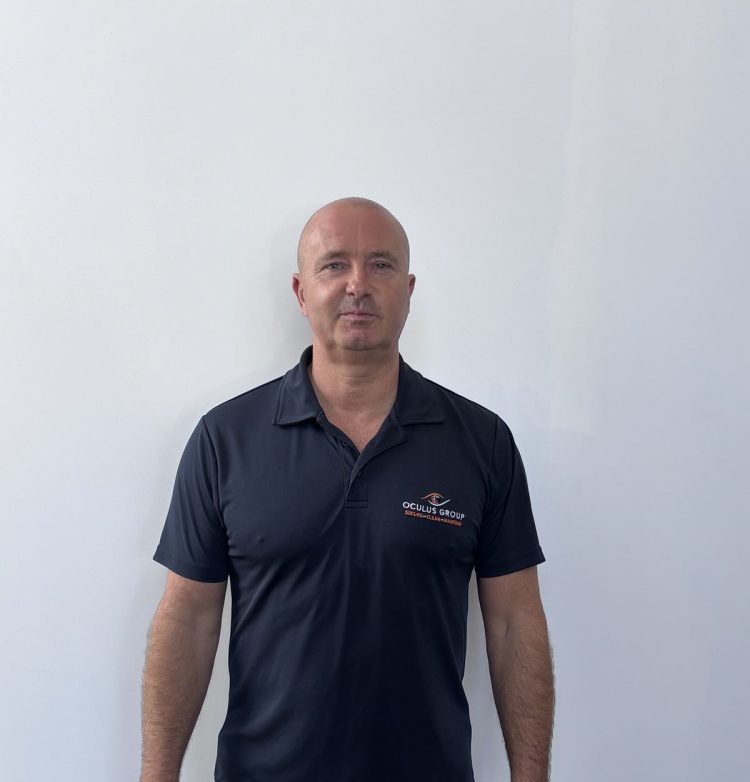
Not many people become their company’s NICEIC qualifying supervisor within two weeks of qualifying as an electrician but David Egan did. The payoff for doing a full-time Level 3 electrical engineering qualification at college before his apprenticeship in electrotechnical installations, which put him years ahead of schedule and within a year of qualifying he was a project manager.
The career that followed built breadth on that technical foundation. David helped a flooring specialist develop an in-house building services division, growing it to nearly £3 million in turnover in three years with a deliberately small team. He was then recruited by Wates, one of his own clients, to turn around a set of struggling contracts, before returning to his previous employer as Project and Technical Manager. Along the way he has managed just about every trade a building can throw at you: electrical, mechanical, fire, refurbishments, roofing and joinery.
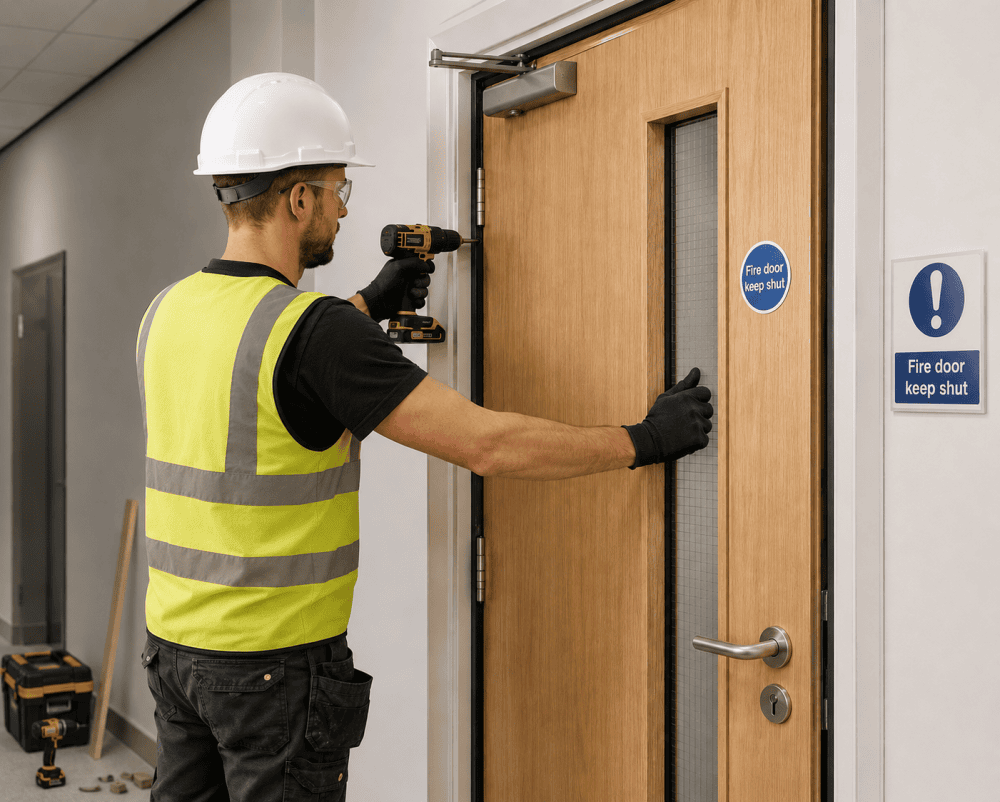
It was there that fire doors became his specialism. Working closely with JLL as the regulations around fire doors were changing, David saw commercial property clients struggling to find a contractor who could both survey fire doors and carry out the remedial work. The business decided to become experts – serious training, specialist hires and third-party accreditation through BM TRADA. What began with commercial property followed those clients into high-rise residential built on backend systems designed to make fire compliance simple and transparent.
His approach to inspections says a lot about how he thinks. An inspection isn’t just a record of today’s faults but a prediction of tomorrow’s, with software tracking how each door deteriorates over time so clients can budget years ahead rather than face surprise costs. And the numbers make the case for vigilance: in David’s experience, 92% of fire doors installed more than five years ago have at least one non-compliant aspect. As he puts it, no building is ever fully compliant – doors are moving parts, hinges wear, doors drop, and sometimes people kick them open when they’re having a bad day. His favourite practical tip costs a pound: the gap around a fire door should hold a pound coin snugly, so anyone walking a building can spot a problem and report it.
David joined Oculus in September 2026 as Facilities Operations Director. His weeks are spent with clients, helping lead the project and account management teams, and working with software partners on systems that keep Oculus ahead of other contractors across commercial and industrial premises.
He arrives as fire safety regulation gets ever more rigorous – the Building Safety Act 2022, the Fire Safety Act and the Fire Safety (England) Regulations 2022 have all raised the bar on accountability and documentation. David’s view is that compliance is an ongoing process, not a one-off inspection, and Oculus is built for exactly that: planned maintenance, specialist compliance services and building works in one coordinated service, so a fire door report doesn’t stop at identifying the problem – Oculus recommends the action and carries out the remedial works.
Away from work, David runs a small 3D design and manufacturing operation at home with his partner and two kids – functional items, and a gentle lesson in how a business works. He describes himself as someone who spends his spare time learning anything and everything. On the evidence of his career so far, that checks out.